The most stubborn facts are those of the spirit, not those of the physical world.
— Jean Gottmann, Geography and International Relations
In 1914, before the First World War, there was this belief: “a European war would be economically disastrous, the moneyed classes won’t let it happen”. Europe went to war anyways, and the war was in fact an economic disaster as everyone knew it would be. Why were those people wrong? Because the rich were not in control: the Tsar and the Kaiser and the Emperor were in control.
I thought of this in 2022, in the lead up to the Russian invasion of Ukraine, whenever I would read someone argue: “Russia invading Ukraine would be economic suicide, the oligarchs won’t let Putin do it, they want to keep their yachts and villas”. Then Putin did it anyways, and the oligarchs had their assets in the West seized. Because the oligarchs are mis-named. They have no political power whatever and live and die by Putin, who appoints them to run stuff, and they get to live well, as long as they are loyal. They are the recipients of political patronage, not the source of it. When the wars start anyways, the same cynical people change their tune, suddenly it’s the armaments industry that’s behind it all, the war was profitable after all.
The default lens through which modern people look at the world is vulgar materialism: a stylized, populist version of historical materialism where everything is explained by money, states are weak, democracy is a fiction, corporations and the rich run the world, ideology and religion and nationalism and language have no explanatory power and are merely covers for secret, underlying material motives.
Once you notice it, you see it everywhere: you’ll hear people say that the Rwandan genocide was a scam to sell machetes or the war in Gaza is about oil or ISIS beheadings are caused by a lack of economic opportunity. People on the right justify skepticism of medicine by invoking Big Pharma, and climate skepticism on climate scientists seeking grant money. Glyphosate is probably the most studied molecule in history at this point, but no amount of studies will convince people it’s safe, because corporations are evil.
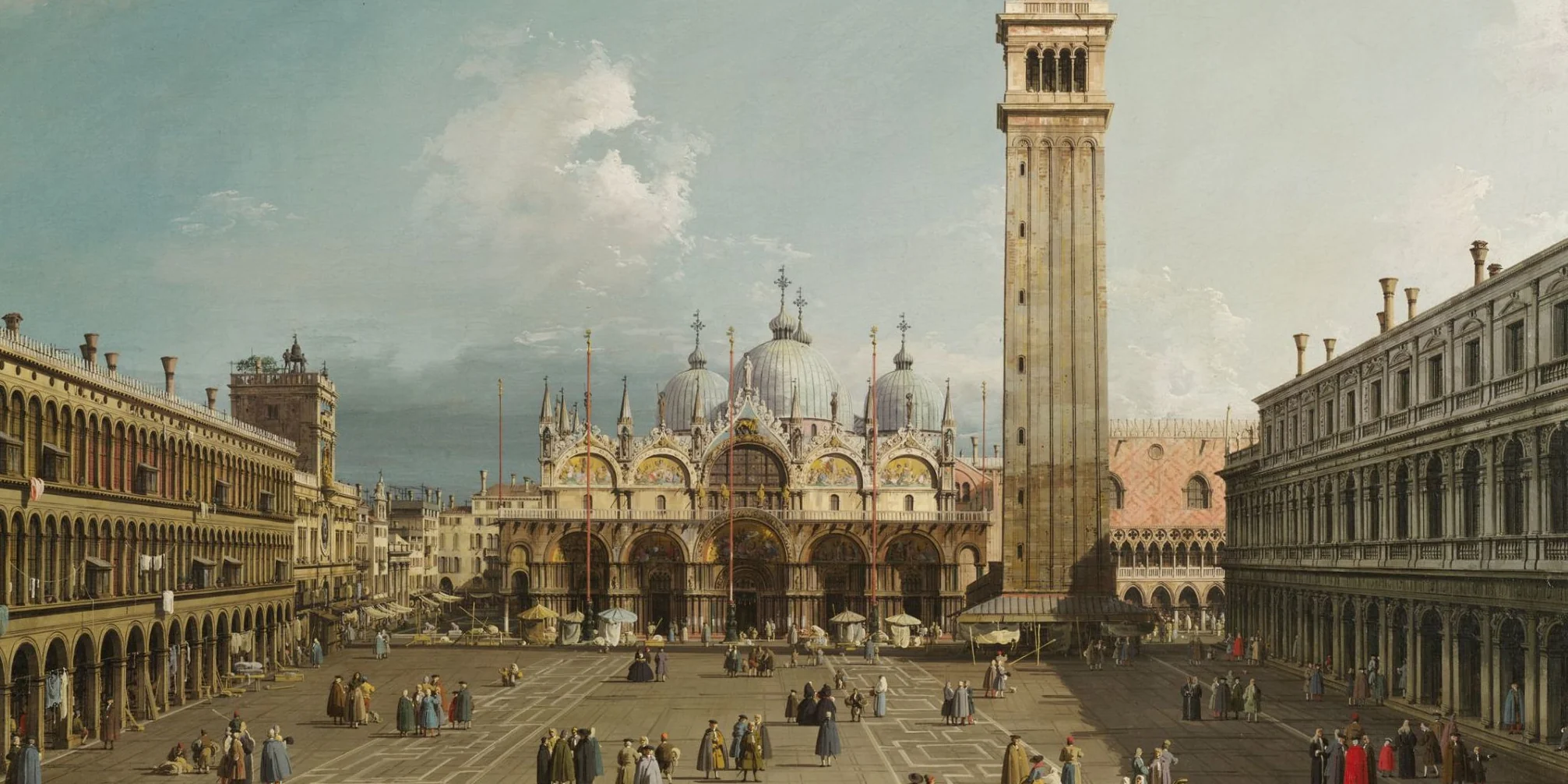
In fiction—if you think this is a valid way to sense the cultural consensus—the trope of the evil corporation has been done to death and beyond. Just this week I finished a novel and watched a movie where the central bad guys are private corporations with quasi-state powers. Seemingly no-one notices that never, not once in all of human history, has there been anything like “corporate state” of science fiction. No, not the VoC or the EIC, which were “companies” in the sense of bodies corporate, the old medieval sense of the word: power was delegated to them, and they ruled on behalf of the states that chartered them. Not Venice either: you couldn’t buy your way into the Golden Book until the republic was well into the decline. The EIC once controlled 25% of world GDP, yet, when Parliament decided it had delegated too much power, they simply neutered it. And you think Jeff Bezos has power?
Now, why is vulgar materialism false?
First, as a way to explain events, the problem with asking “cui bono?”, is that whatever happens—literally in any circumstance—someone will benefit. If nothing bad happens, the peacetime economy benefits. If something bad happens, then, because the means of relief are obtained through the market, the companies that provide those means benefit. Thus war benefits arms manufacturers, plagues benefit pharmaceutical companies, earthquakes benefit glaziers. And it’s not wrong to benefit from relieving a harm. The COVID vaccines saved millions of lives: why shouldn’t pharmaceutical companies benefit? It is wrong to benefit from perpetuating a harm, but companies have limited ability to do that, more on which below.
So the question “who benefits?” always has an answer, which often proves nothing. And if there is no obvious causal chain from the beneficiary to the event, then that just proves the shadowiness and corruption of the whole thing.
Second, we can ask: in the real world, does money give you influence over the state? To some extent, yes. Some lobbying efforts succeed. America is one of the few countries in the world where it’s legal to advertise prescription drugs to the public, for example. But corporations don’t have veto power over the state. If e.g. Pfizer spends billions on a clinical trial, and some guy at the FDA says no, and wipes that investment, who wins? The FDA wins. Pfizer can’t do shit.
There’s also an invisible graveyard problem, where the success of lobbying is very salient, because it’s often shockingly offensive. But there are many contrary cases that are less salient because, well, if you ban something, it doesn’t happen. The Nuclear Regulatory Commission did not approve a single nuclear reactor from its creation in 1975 until Vogtle 3+4. What has Westinghouse done about that? Nothing successful, apparently. It’s not like they’re getting paid to not build reactors.
Big Tech has a lot of smart people and a lot of money. Do tech billionaires run California like a private fiefdom? Reader, they don’t even run San Francisco. The best they can do is maybe help a slightly more moderate Democrat get elected as mayor.
Maybe it helps to try the first-person. Say you are a billionaire, and you want to make some kind of political change. In a democratic society that means paying people to:
- Perform the intellectual labour of getting policies in the hands of the people who can enact them.
- Advocate for those policies.
That is, you start or fund a think tank that writes policy proposals, or a media organization that advocates your views. But for every person who will do this effectively and faithfully, there are a hundred who will happily take your money and waste it, either out of incompetence or value misalignment. Sifting the effective organizers, wonks, lobbyists, advocates etc. from the chaff can’t be delegated, because then you have an infinite regression: at the very least you need to spend a lot of time and money and opportunity cost to hire one person to delegate the task of staffing an effective organization. A hands-off billionaire will just throw their fortune away. Many do this, and in fact it’s the default form of philanthropy.
In a non-democratic society, you can try to buy political power through bribes, intimidation etc. But the people in power can just expropriate your assets. So you need the power first to protect the wealth.
Finally: government is violence and coercion. Sovereignty over some volume of space is the ability to tax, arrest, imprison etc. the people there and to get away with it, and, ideally but not necessarily, to have that violence recognized as legitimate. Now: can Google carry out a drone strike? Can Amazon field an air force, appoint a judge, levy taxes? Of course not. If a corporation or a billionaire tried to acquire one one-trillionth of the state’s capacity for legitimized violence the state would vaporize them.
Links
- Gilens and Page, 2014 (PDF), h/t Gwern.
- The Oil Wars Myth, by Emily Meierding. A really good book that eloquently and systematically makes the case that countries don’t fight wars over access to petroleum resources.