Right now there’s a cruise ship parked outside Cabo Verde because of an outbreak of Andes virus. Yep, another cruise ship. I don’t get the appeal. It’s like a big open-air serial passage experiment: you get a bunch of old people with failing immune systems in close contact and race a pathogen through them.
How much should I worry about this? Is this early January of 2020? I tried asking Claude but the biosecurity filter kept blocking my queries. The WHO says:
Although uncommon, limited human‑to‑human transmission of HPS due to Andes virus has been reported in community settings involving close and prolonged contact. Secondary infections among healthcare workers have been previously documented in healthcare facilities, though remain rare.
WHO currently assesses the risk to the global population from this event as low […] WHO advises against the application of any travel or trade restrictions based on the current information available on this event.
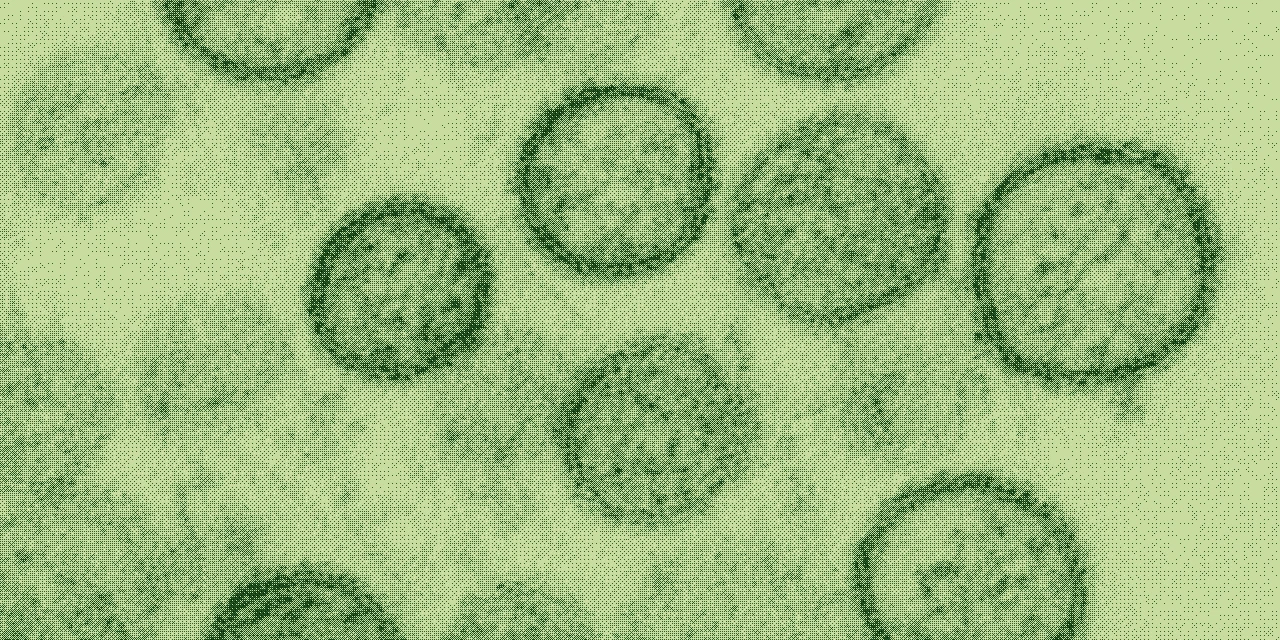
So, hantavirus is the family. They are carried by rodents and spread by aerosols. In humans they can cause hantavirus pulmonary syndrome (HPS), which has a case fatality rate (CFR) of between 30 and 60%. Not great! Used to be these infections were mouse-to-human dead-ends. But Andes virus (ANDV), first identified in 1995, is known to spread from human to human.
The last time there was an outbreak was 2018–2019 in Epuyén, Chubut, a town of 1,500 on the lee side of the Andes (quite beautiful). Described in this paper. 34 known infections and 11 deaths for a CFR of 32%. The $R_0$ was 2.12, reduced to 0.96 after control measures were implemented. Given the small number of cases, there should be some uncertainty about the $R_0$. But $R_0 > 1$ is the threshold for sustainable transmission. In this outbreak, the index case, while symptomatic, attended a birthday party with 100 other people, and infected five guests in 90 minutes, who went on to infect more people. The authors write:
The super-spreading capability of the ANDV Epuyén/18−19 strain shows a facility ($R>2$) for sustaining continuous chains of transmission if no control measures are enforced.
The appendix has some interesting stuff on how patients were infected at the birthday party. A further concern here is the incubation period: Wikipedia says the incubation period is between one and eight weeks. In the Chubut outbreak, the distribution was:
| Onset | Number of Cases | % of total |
|---|---|---|
| ≤15 days | 5 | 15% |
| 16-21 days | 10 | 29% |
| 22-28 days | 13 | 38% |
| ≥29 days | 6 | 18% |
Which is not good. I don’t have more data to draw a nice-looking CDF.
Now this all sounds quite bad. Are there reasons to be optimistic?
First, Argentina has had 710 cases of HPS in the period 1995–2008 (Martínez 2010) and a further 533 cases in the period 2009–2017 (Alonso 2019), and we are all still alive. In the latter period, most of these cases are from occupational/recreational exposure to rodent feces and only 1.8% of cases are from suspected human-to-human transmission. So, over 1,200 cases and every one of them fizzled out, but for one outbreak which was limited after successful contact tracing and quarantine.
Second, the virus has left Argentina before: once to Switzerland in 2016, and once to the United States in 2018. In the second case the patient “while ill, [traveled] on two commercial domestic flights”. And neither export led to a general outbreak.
Thirdly, in a small outbreak like the Chubut one, the $R_0$ can vary wildly from social factors unconnected to the virus, e.g. if the birthday party had not happened. You need a large $n$ to get the $R_0$ as a property of the virus itself. It’s possible the Chubut outbreak just had anomalously high transmission.
What does this add up to? I don’t know. On the balance of evidence, I think this outbreak is more likely than not to fizzle out. In the interest of accountability, and putting my beliefs on record (which is the only objective way to judge the accuracy of your mental model) I’m gonna say:
- 70% probability the outbreak ends with fewer than 300 deaths.
- 90% probability the outbreak ends with fewer than 1,000 deaths.
And yet. And yet it feels so much like early COVID, particularly with public health authorities making very complacent remarks that “it’s not that transmissible, contact tracing will work, quarantine will work”. Complacency at the start, and severity at the end, is exactly why COVID was such a fuckup.